ADITI
NETIAN
Of Curves and Hands
What does it mean to translate a ritual without flattening it?
Of Curves and Hands begins with kolam-making, a practice held in the body as much as in the drawn
line. The work asks how touch, rhythm, repetition, and care can move through sensors, code, and mechanical
drawing while still carrying cultural memory.
Part of the ongoing research project Anatomy of a Kolam;
Independent Research
by
Aditi Neti
Presented by DesignSingapore Council;
curated by Hunn Wai with assistant
curator Eian Siew
physical computing,
interactive experiences,
exhibition
2026
KOLAM
The story begins at the threshold. Across South India and other parts of Asia, kolams are drawn daily at the
entrances of homes and temples: geometric line drawings made by hand using rice flour or rice paste.
They are both ritual and offering, welcoming prosperity and positive energy while sustaining small creatures
such as ants and birds.
Their complexity is not only visual. A kolam carries bodily knowledge: practiced hand movements, rhythm,
repetition, pressure, and material sensitivity passed down through generations.
ANATOMY OF A KOLAM
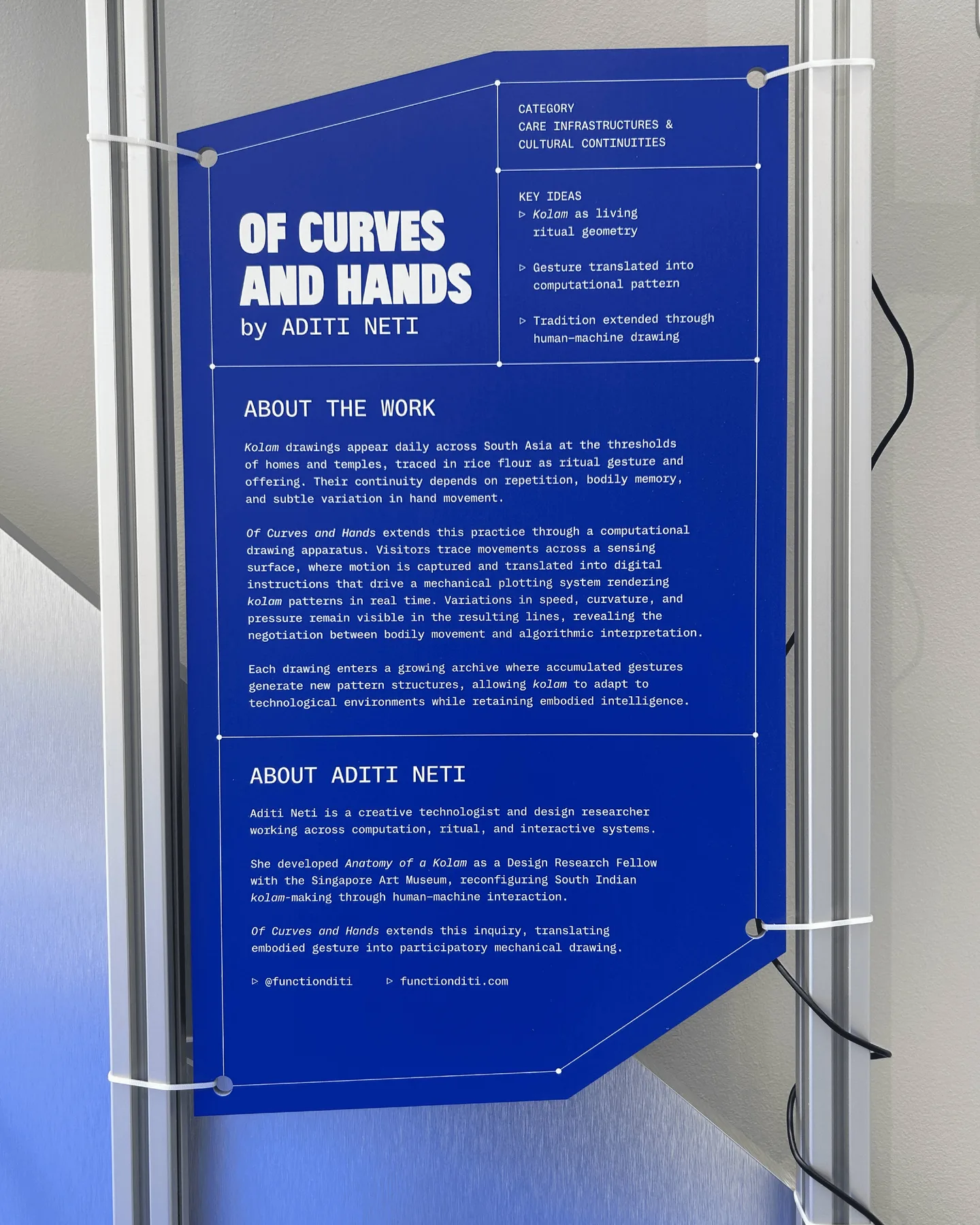
This work grows out of Anatomy of a Kolam, an ongoing participatory design research project exploring
how kolam-making can be reinterpreted through contemporary computational and mechanical systems without losing
its embodied, ritual, and cultural depth.
The research sits between speculative design, physical computing, and interactive experience. Rather than asking
whether a machine can reproduce a kolam, it asks how human intention, gesture, and machine logic might co-exist
in the act of making one.
PROTOTYPE ISLAND
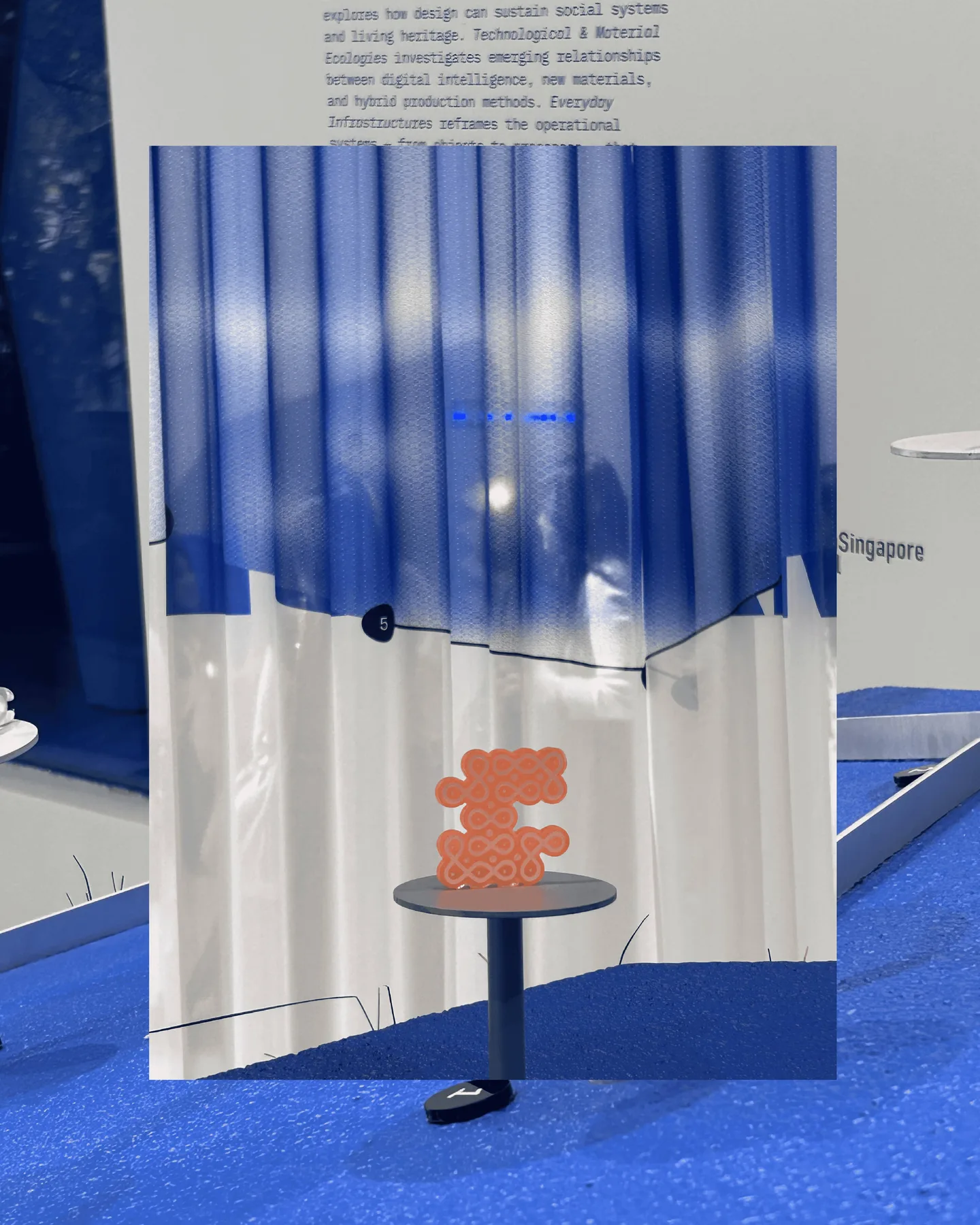
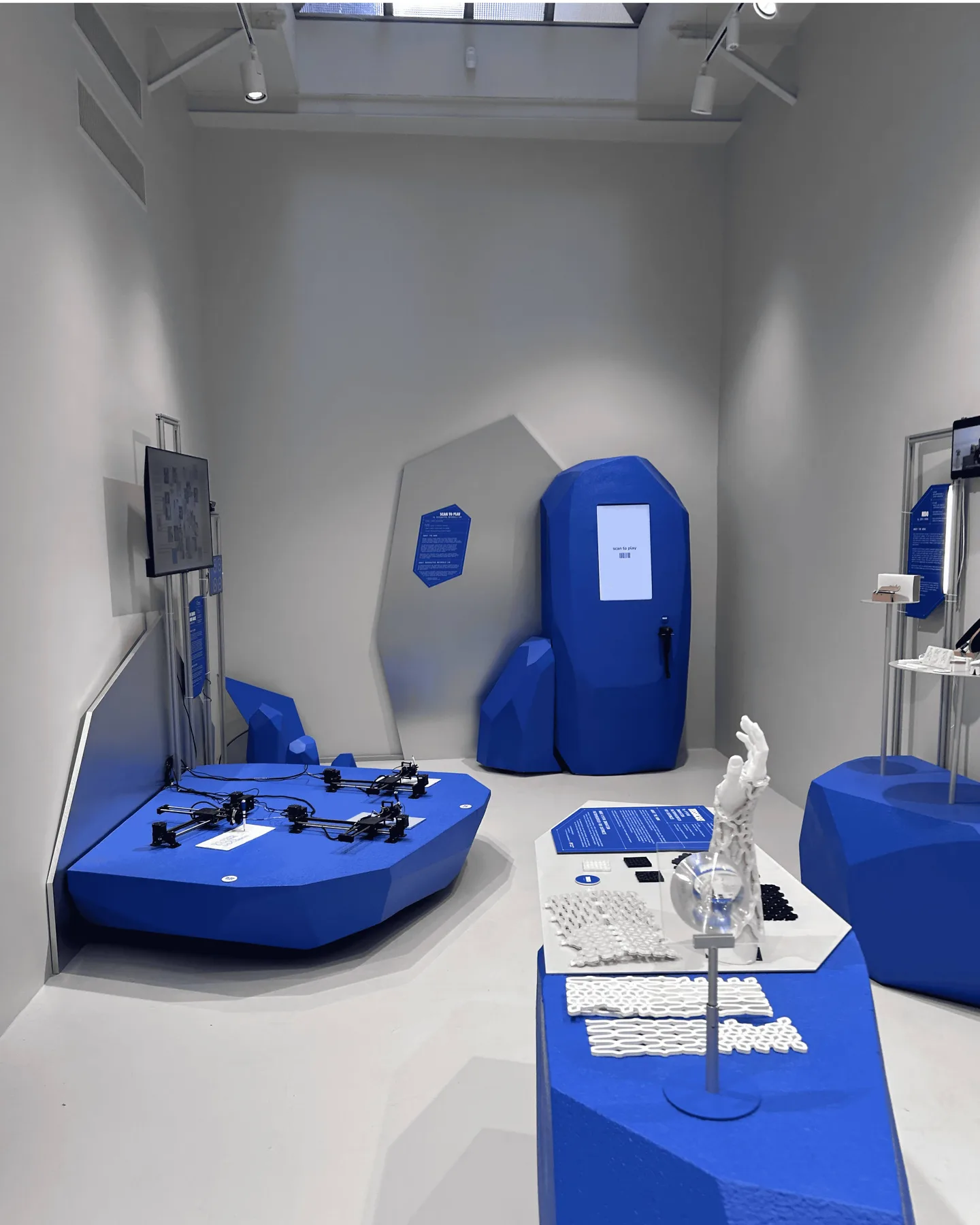
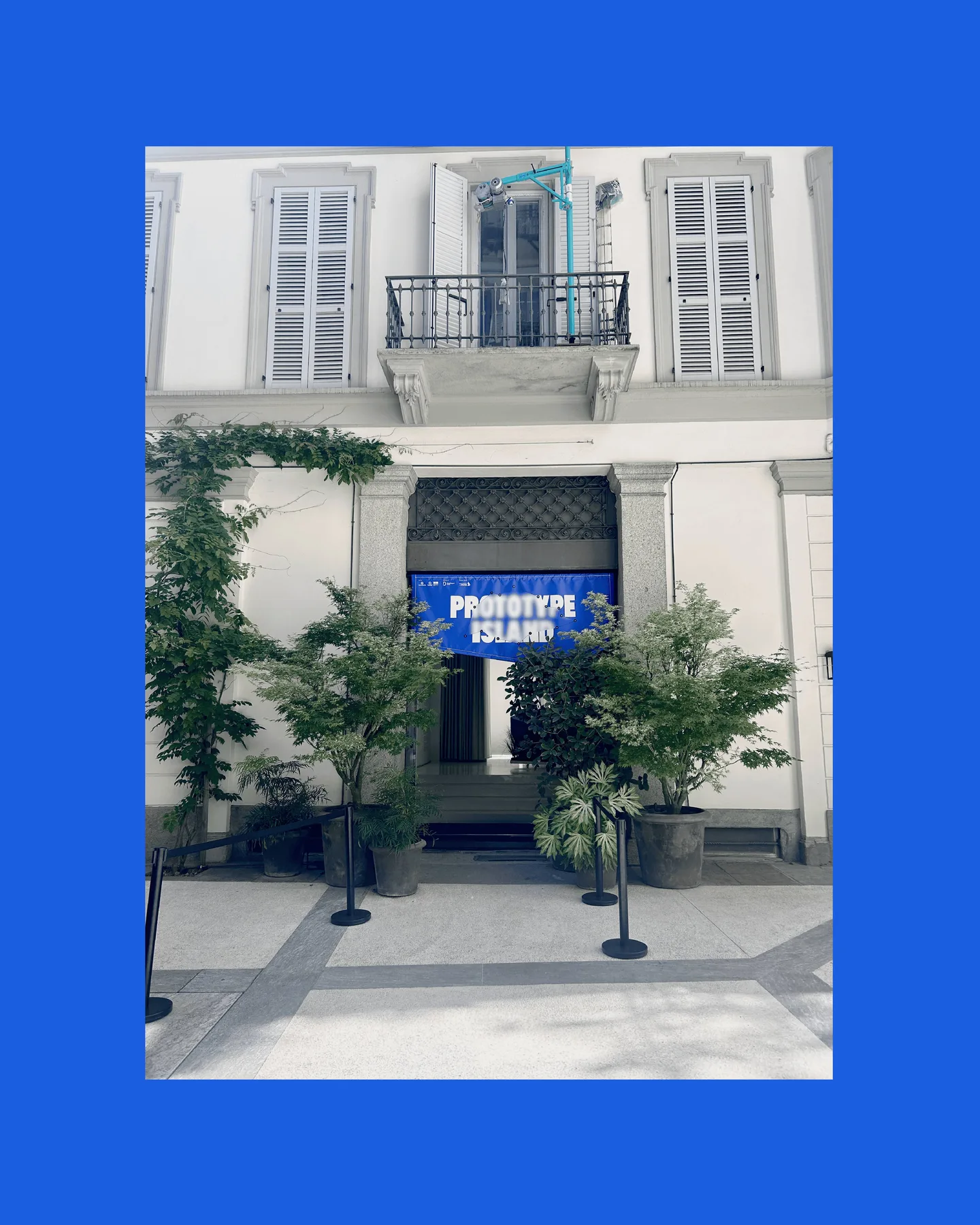
In Milan, the project entered Prototype Island, an exhibition presented by the DesignSingapore
Council that frames Singapore as a living prototype: a nation that is never static, but continuously evolving,
testing, and adapting through design.
Led by curator Hunn Wai with assistant curator Eian Siew and global perspectives advisor Maria Cristina Didero,
Prototype Island brought together 15 transdisciplinary projects by Singapore-based designers across technology,
materiality, care, craft, and urban living futures. Within this context, Of Curves and Hands became a
question of cultural continuity: how might a practice rooted in everyday ritual continue to evolve through new
tools?
The exhibition debuted at Milan Design Week from April 21-26, 2026 at Foro Buonaparte 54 in the Brera Design
District, and received the inaugural Fuorisalone Award Special Mention for Essere Progetto / Being the Project.
Its Singapore homecoming ran from July 24-September 20, 2026 at ArtScience Museum, B2 Circulation.
PROTOTYPE ISLAND HOMECOMING→
MILAN DESIGN WEEK RELEASE→
FUORISALONE AWARD→
A KOLAM IN TRANSLATION
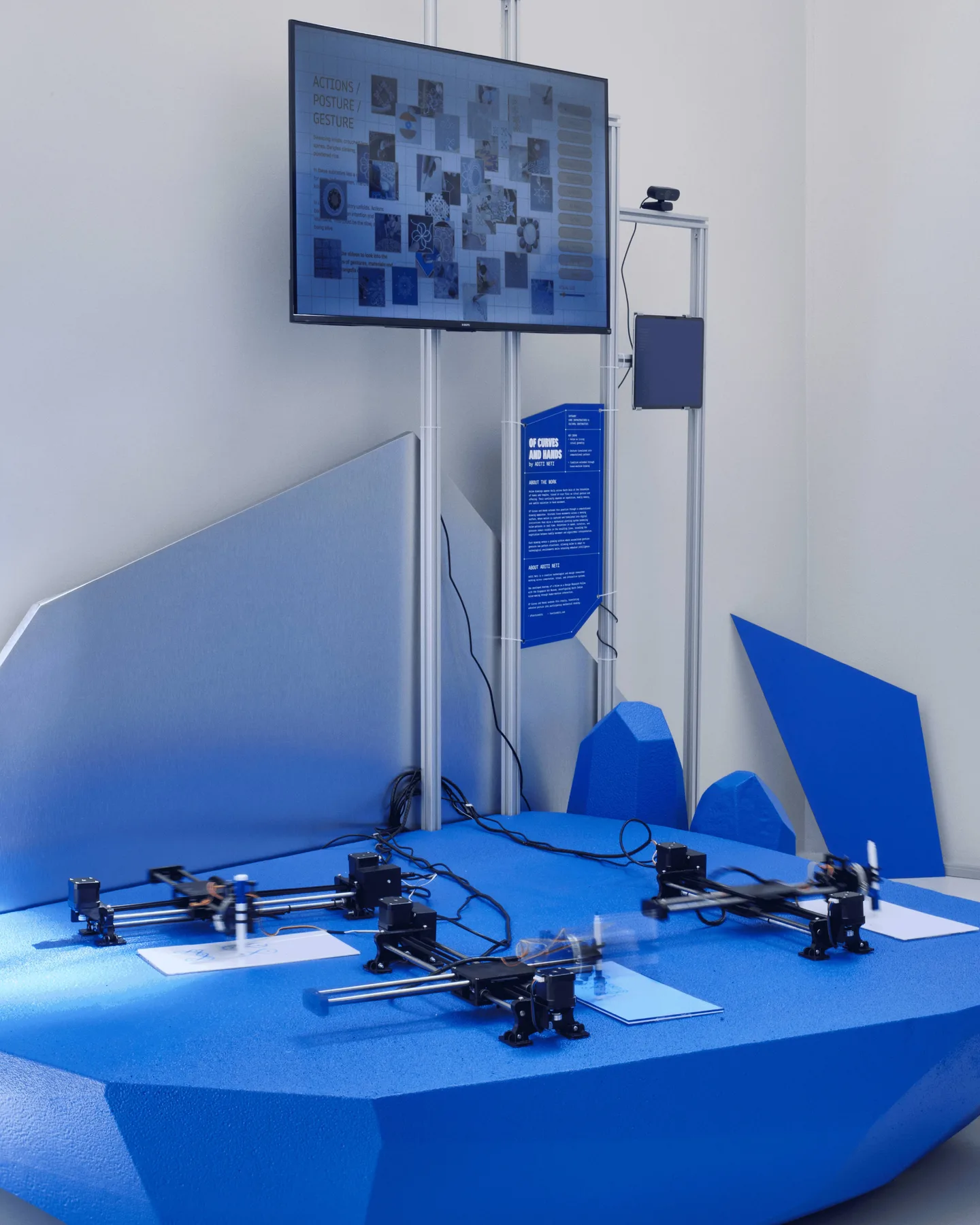
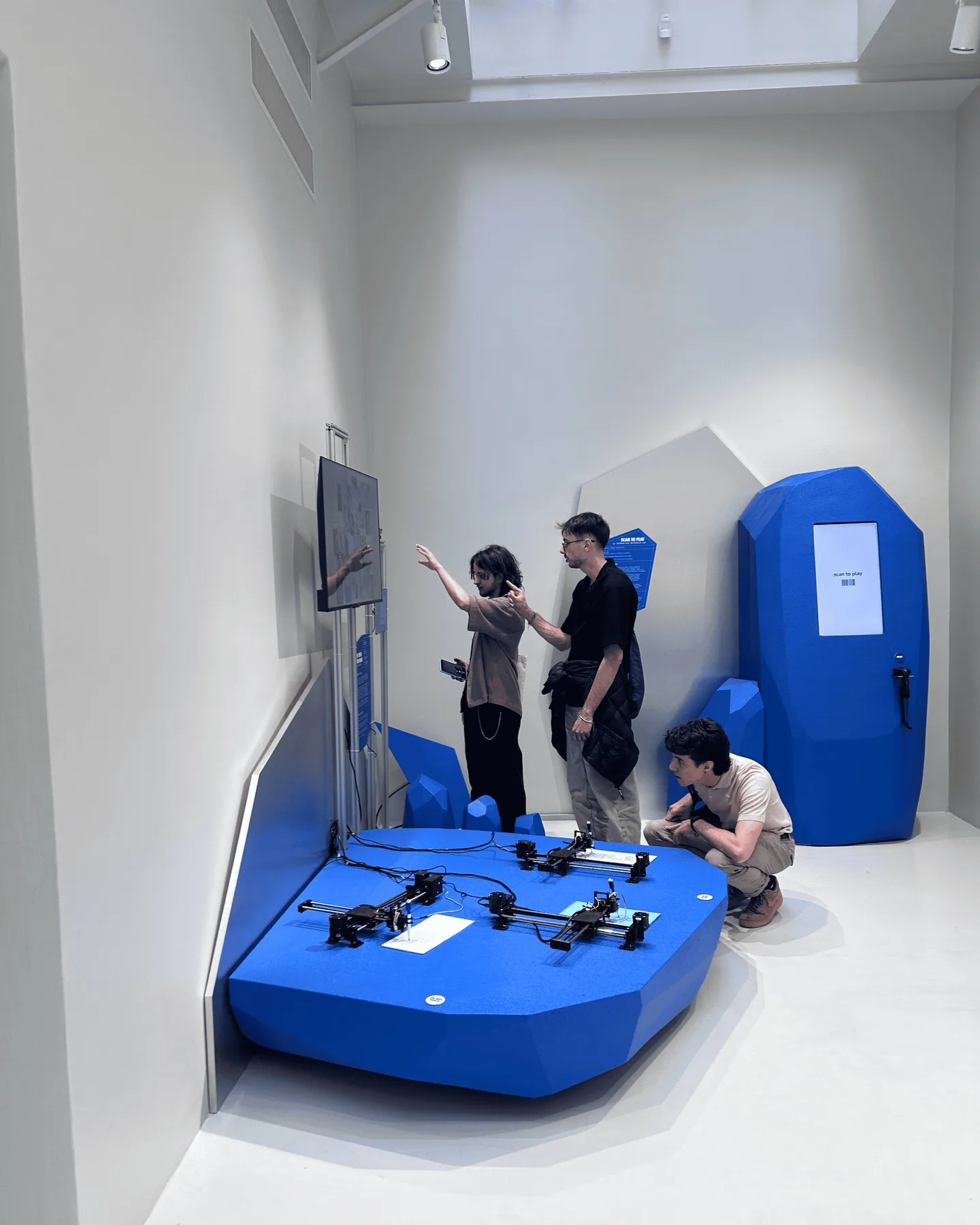
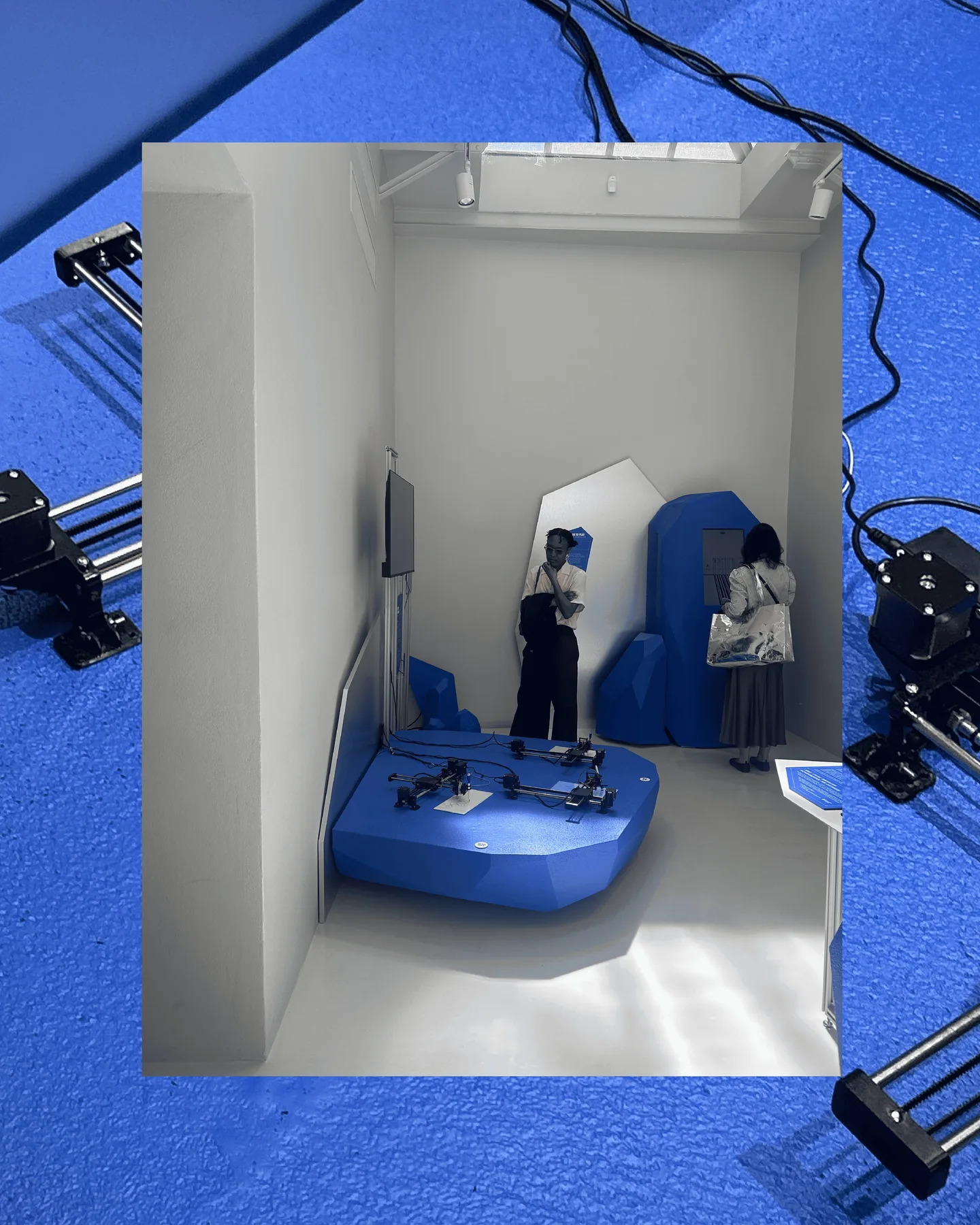
Of Curves and Hands: A Kolam in Translation is the site-specific iteration that emerged from
this broader inquiry.
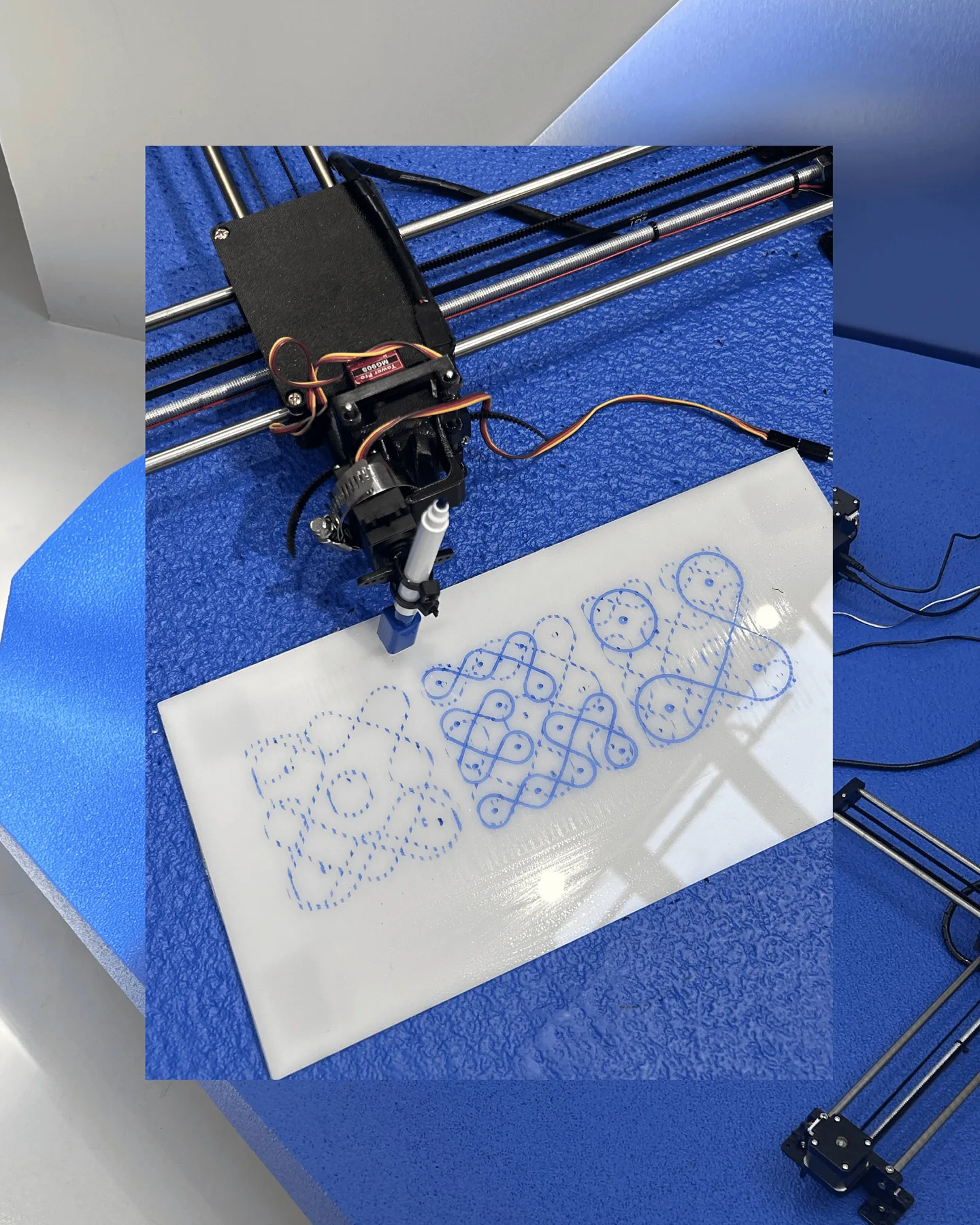
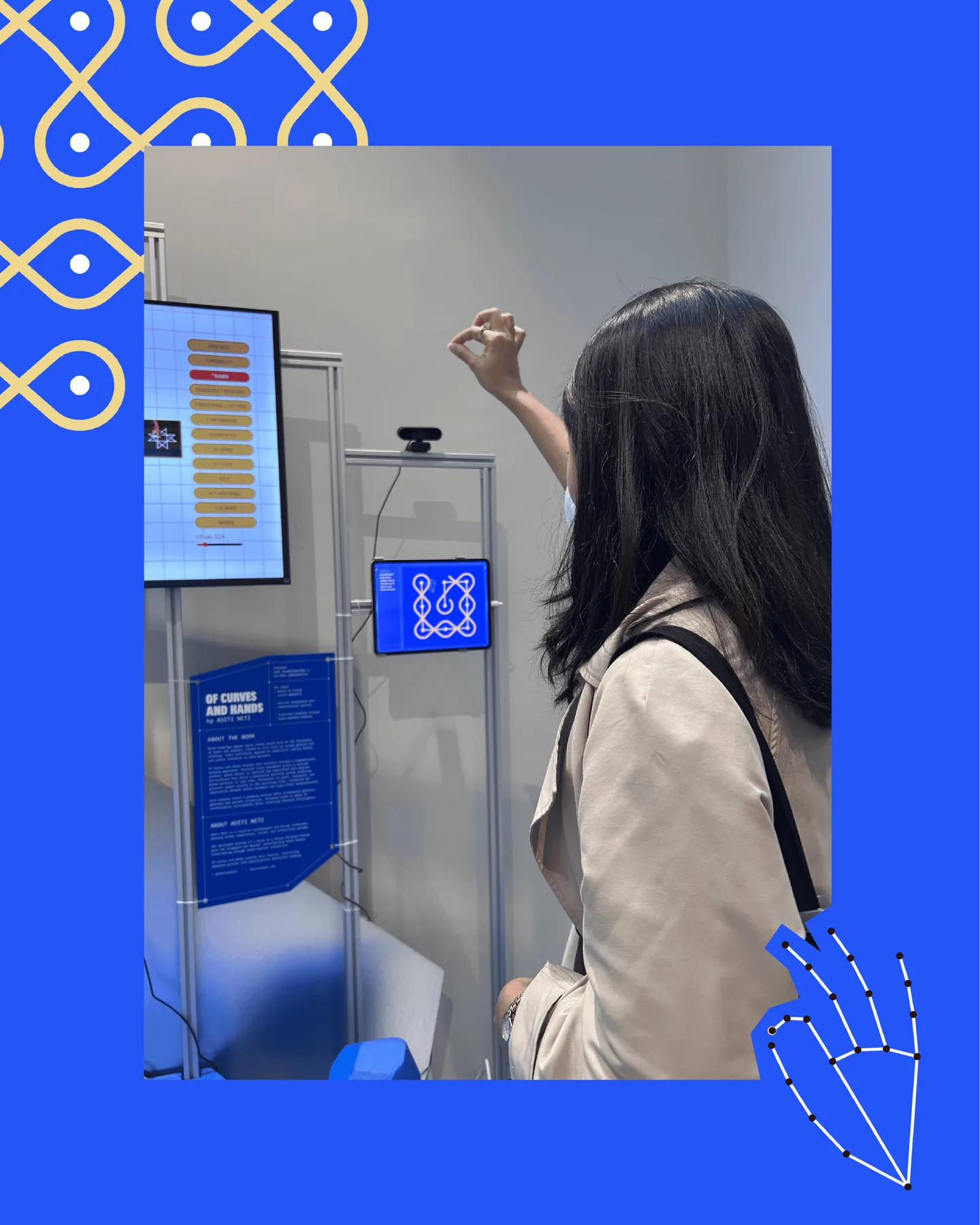
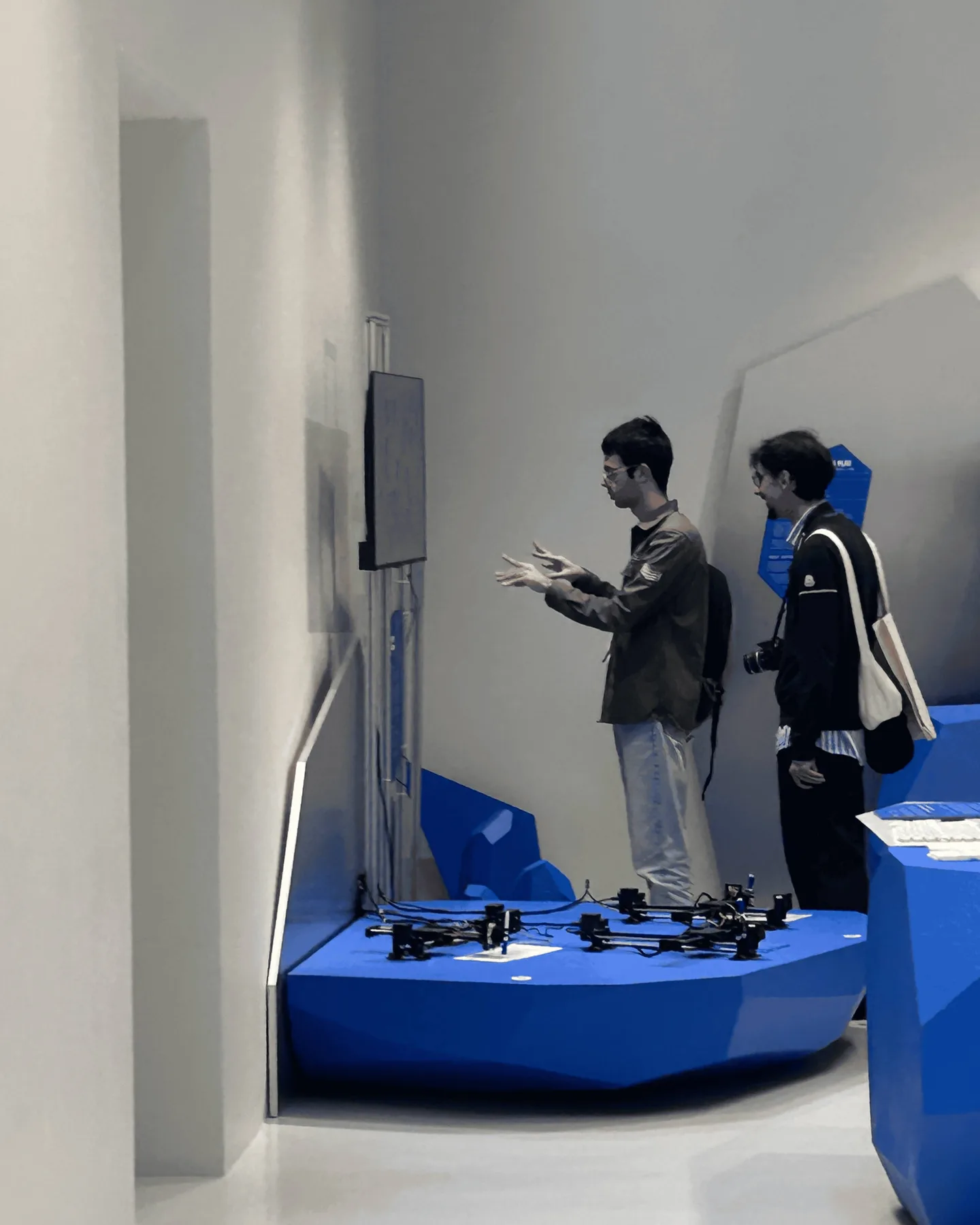
Visitors begin with their hands. Through embodied, hand-led interaction, their movements are captured as input,
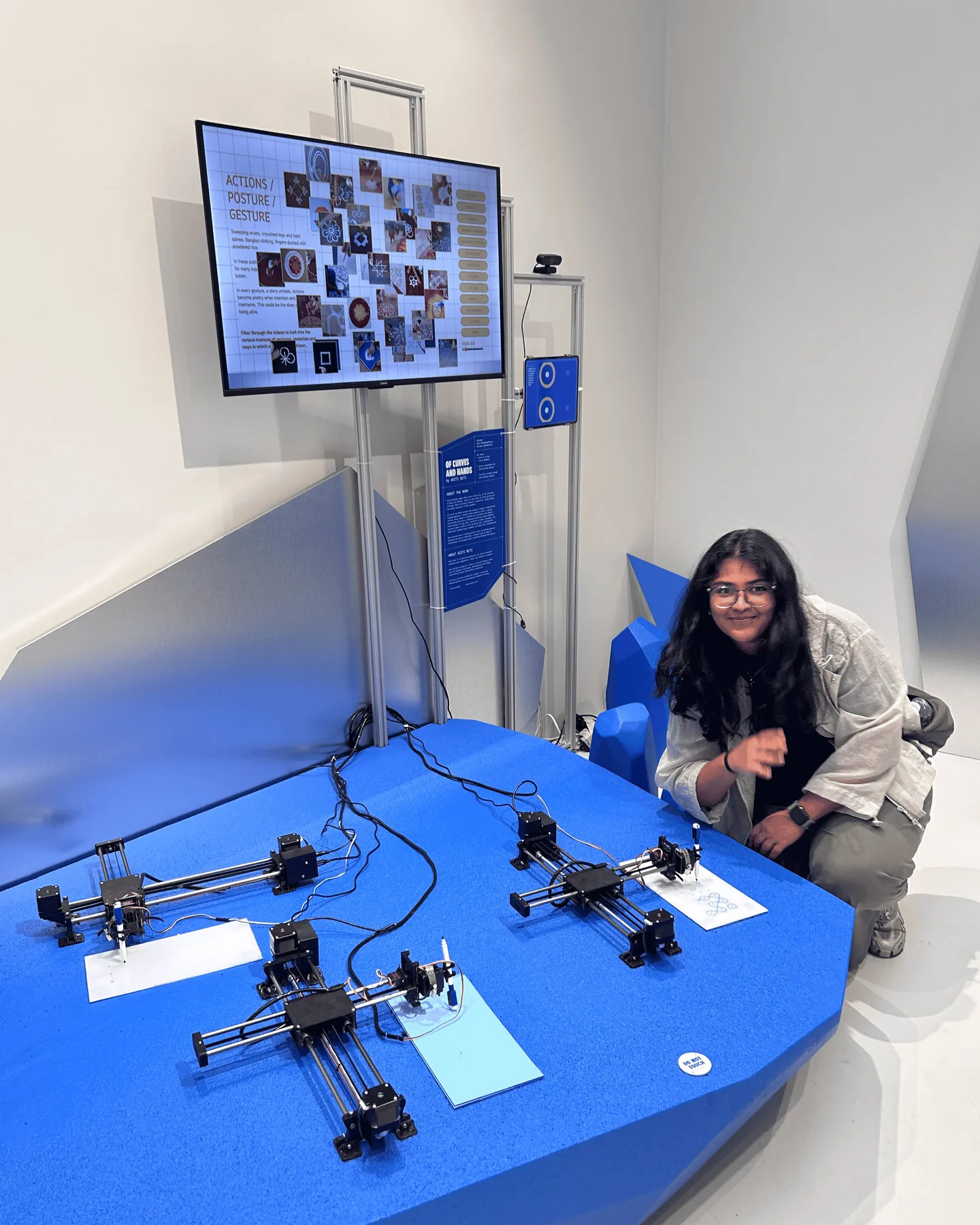
translated through a computational system, and rendered physically by a mechanical drawing setup. Gesture
becomes both the interface and the meaning of the work.
GESTURAL TRACES
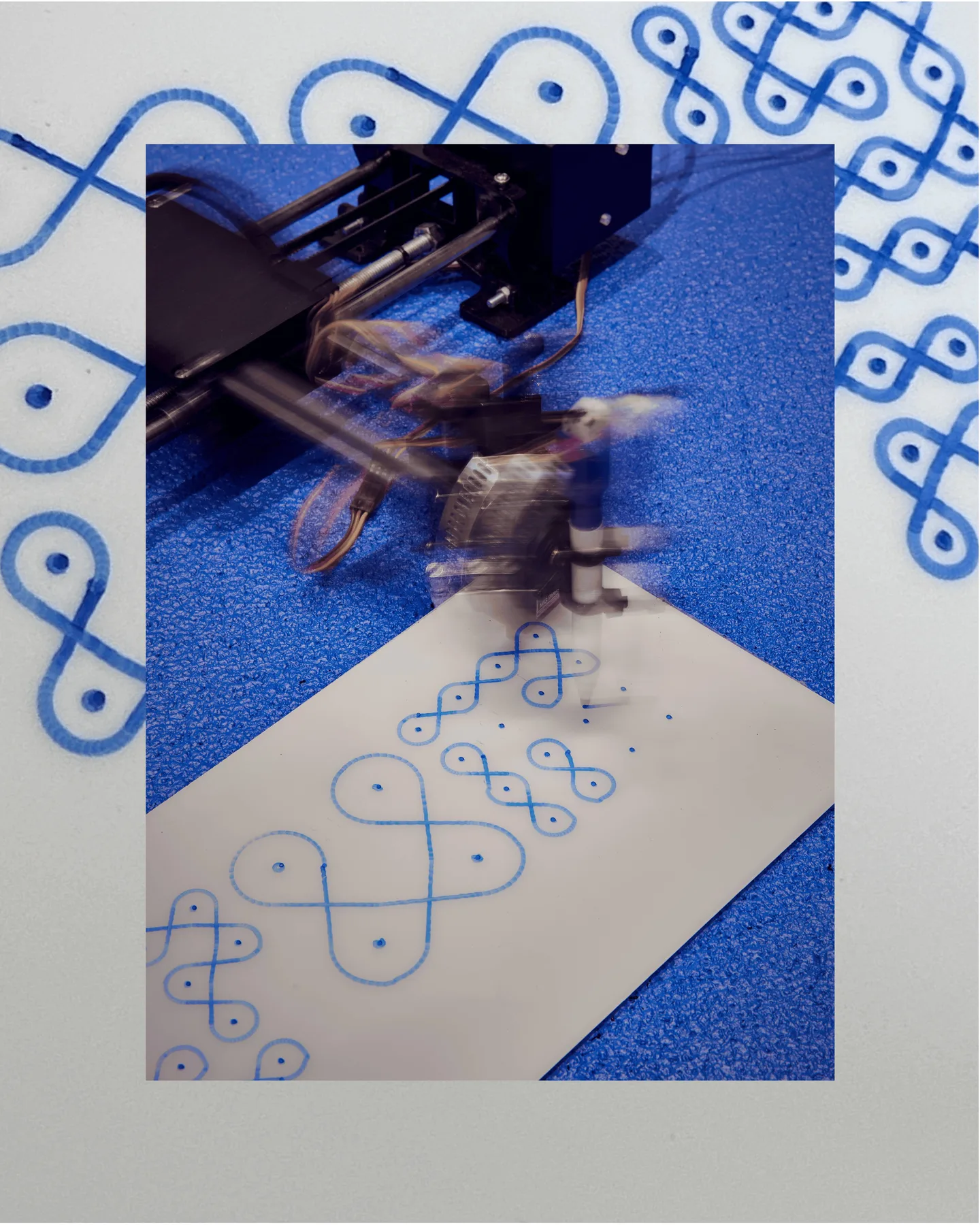
What remains is not a perfect reproduction of tradition, but a trace of encounter. The plotted drawings preserve
unevenness, rhythm, improvisation, and evidence of touch. Each interaction produces a tangible outcome while
also contributing to a growing collective archive shaped by many hands.
The project returns to its opening question through making. What is gained, and what risks being lost, when
rituals rooted in touch, care, and repetition are mediated by technology? Of Curves and Hands proposes
interaction not as spectacle alone, but as a form of shared, embodied making.
functionditi@gmail.com
© Aditi Neti 2026